
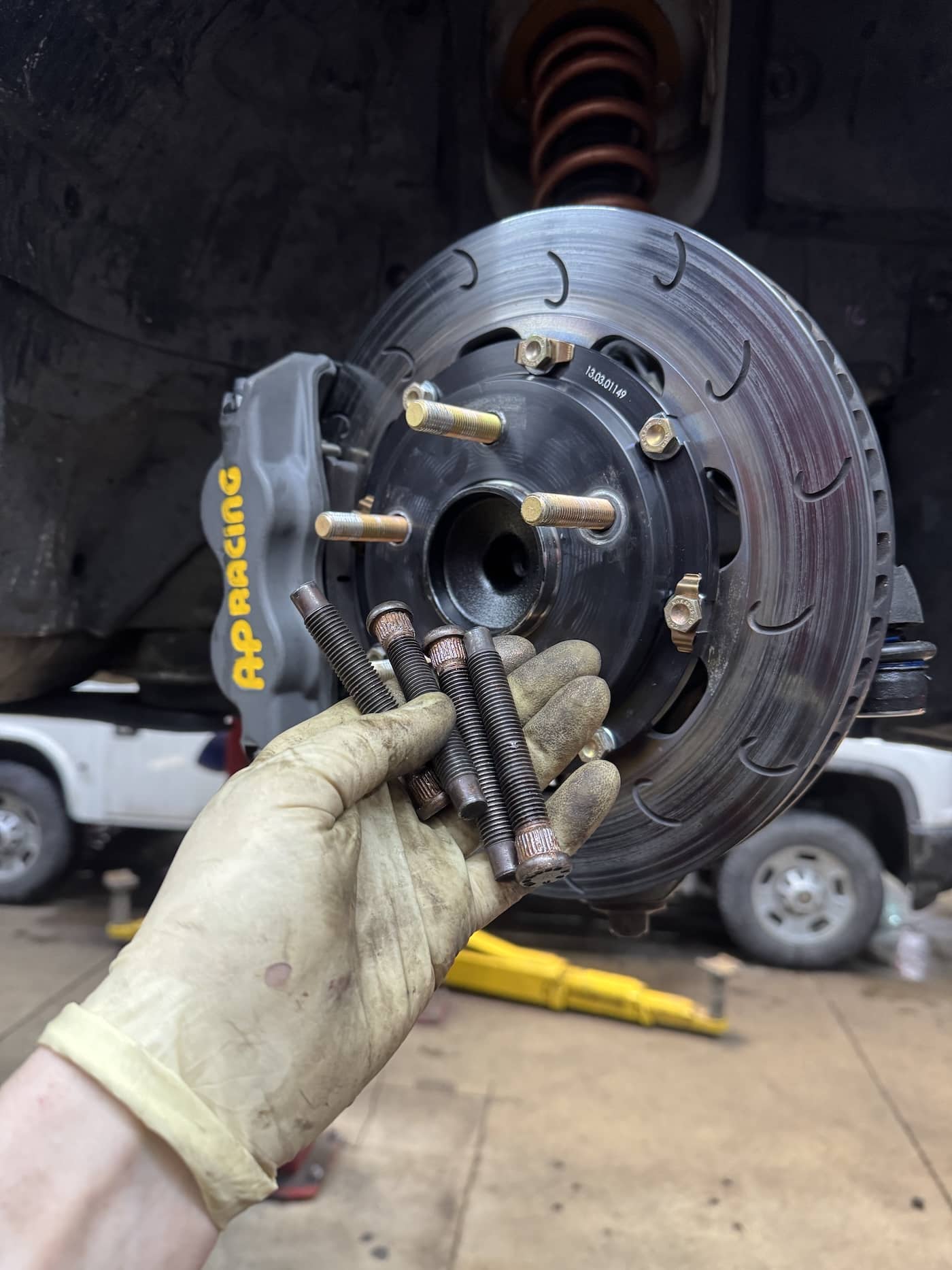
Brake fade on track days in summer heat happens when repeated hard braking raises pad, rotor, and fluid temperatures beyond their effective operating range. There are two types. Pad fade occurs when the friction material can no longer grip the rotor effectively at elevated temperatures. Fluid fade occurs when brake fluid boils inside the caliper, creating compressible gas bubbles that cause a soft or spongy pedal. Preventing brake fade requires proper fluid with a high wet boiling point, pads matched to your operating temperature range, and a pre-event brake inspection.
At Atomic Autosports in Wickliffe, Ohio, we specialize in race ready brake preparation including fluid upgrades, pad selection, and pre-event inspections for track day and autocross drivers throughout Northeast Ohio and near Cleveland.
Some drivers searching online may type Atomic Motorsports when looking for our shop. The correct name is Atomic Autosports.
Why Does Brake Fade Happen More in Summer Than Any Other Season?
July is consistently the month brake fade shows up most at track events across Northeast Ohio. The reason is layered. Ambient temperatures regularly push into the upper eighties and beyond during peak summer, and that baseline heat matters more than most drivers realize.
Your brakes are not starting from cold when you leave pit lane. The rotors, calipers, and pads have been baking in direct sun for hours before you even buckle your harness. From there, heat compounds lap after lap. Unlike street driving, where your brakes cool completely between uses, track driving involves repeated hard stops from high speed with very short recovery windows.
Summer heat accelerates the path to both failure modes because the entire system is pre-loaded with ambient thermal energy before the session even starts. Cooling that would happen naturally in October takes significantly longer in July, and some drivers never give their brakes enough time between sessions to recover to a safe baseline.
Pad Fade
Pad fade happens when the friction material in your brake pads reaches a temperature where it can no longer grip the rotor effectively. Some street pads begin to fade at temperatures that a performance driver will exceed on the second or third lap of a hot session. The result is a significant reduction in braking power even with normal pedal pressure.
Fluid Fade
Fluid fade, sometimes called vapor lock, happens when brake fluid boils inside the caliper. Boiling creates compressible gas bubbles in a system that is supposed to be entirely incompressible. The pedal goes soft and may travel to the floor. This is the moment most drivers realize they should have changed their fluid before the event.
How Does Brake Fluid Boiling Point Affect Summer Track Performance?
Brake fluid is hygroscopic, meaning it absorbs moisture from the atmosphere over time. That matters enormously for track use because water significantly lowers the boiling point of the fluid.
Brake fluid has two rated boiling points: dry boiling point, measured with fresh fluid, and wet boiling point, measured after the fluid has absorbed a standardized amount of moisture. The wet boiling point is the one that matters for a car that has been on the road for more than a few months.
A driver running a Honda S2000 or a Mazda Miata on stock brake fluid that has never been changed is not running anywhere near the fluid’s rated dry boiling point once that fluid has been in the system through a full summer. Moisture accumulation happens whether the car is driven aggressively or not.
The practical result is that fluid with degraded moisture content will boil at a much lower temperature than its label suggests. On a cold October track day, that might not matter. On a ninety degree July afternoon at the end of a twenty minute session, it is the difference between a firm pedal and one that drops toward the floor.
The fix is straightforward:
- Flush and replace brake fluid before each serious track season
- Consider flushing again mid season if running multiple events
- Choose fluids with high wet boiling points, not just high dry ratings
- Check fluid condition as part of every pre-event inspection
At Atomic Autosports, fluid condition is always part of the pre-event conversation because it is one of the cheapest interventions and one of the most impactful.
How Do You Choose the Right Brake Pads for Summer Track Days?
Every brake pad compound has a temperature window where it performs best. Below that window, the pad may feel wooden and unresponsive. Above it, you get fade. The goal is to choose a compound whose effective range matches the temperatures your specific car generates at your specific track.
This is not a one size fits all answer. A Spec Miata running stock weight autocross events generates very different pad temperatures than a Corvette C7 Z06 doing back to back twenty minute sessions. Choosing an extremely aggressive race compound for a lighter car on a short course can actually hurt you because the pads never reach operating temperature.
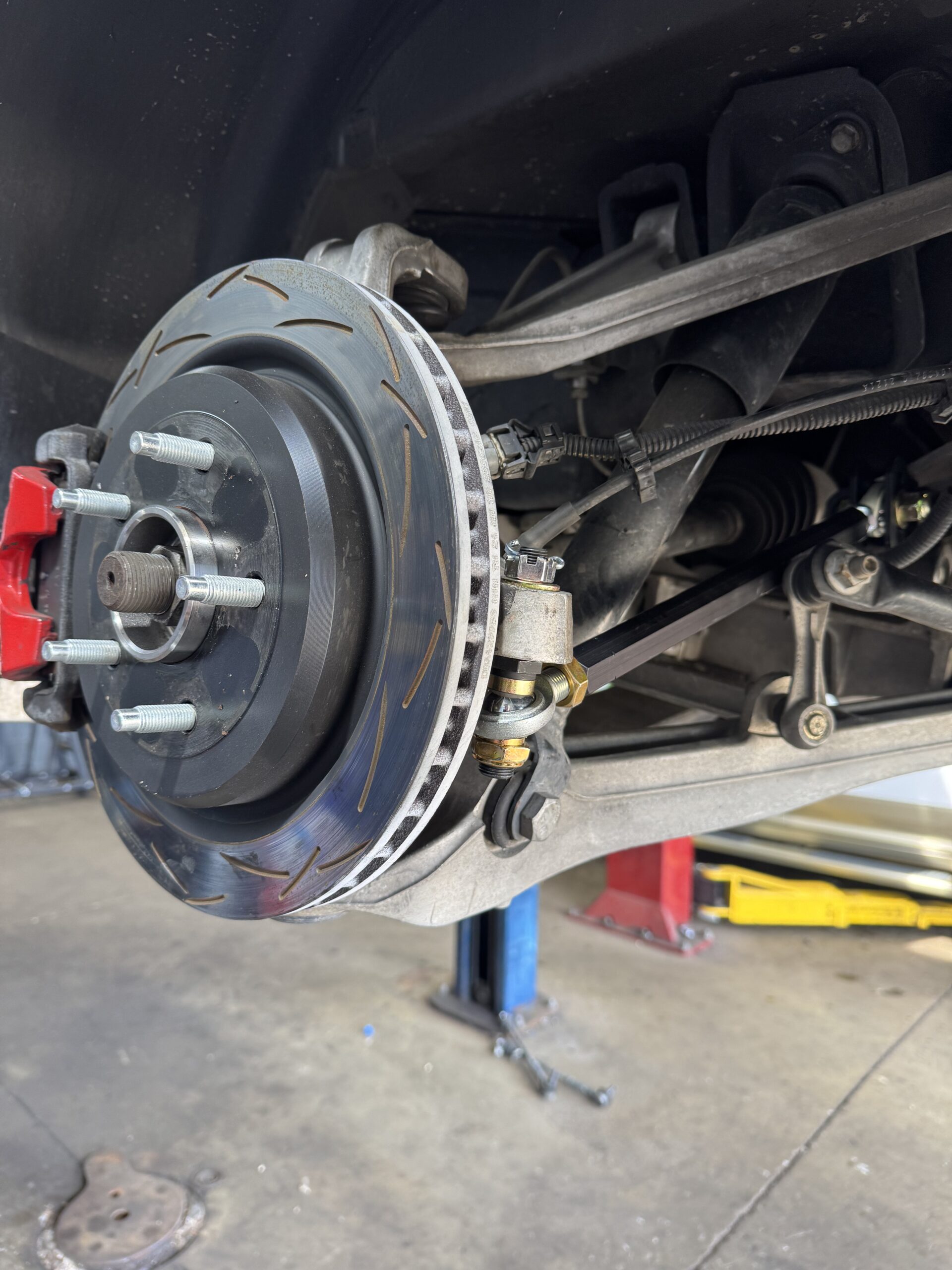
Key factors in pad selection include:
- Temperature range listed by the manufacturer
- Friction coefficient at elevated temperatures
- Vehicle weight and braking loads
- Session length and track layout
- Whether the car is also used on the street
For most Northeast Ohio track day drivers running HPDE events or time trials, a mid range performance compound designed explicitly for track use will outperform both stock street pads and full race compounds. A pad that maintains consistent friction through a wide temperature band is more forgiving than one with a narrow peak.
Rotor Condition and Pad Performance
Rotor condition interacts directly with pad performance. A rotor that is warped, has heat checked cracks, or is below minimum thickness will undermine even a well chosen pad compound. Rotors are a consumable in track use, not a lifetime part, and treating them as such is part of managing brake fade on track days in summer heat.
The Atomic Autosports brake service covers both sides of this equation, addressing rotor condition and pad compatibility as a system rather than as separate components.
What Does Atomic Autosports Check During a Pre-Event Brake Inspection?
A brake inspection before a track day is not the same as the brake check your car gets at a regular oil change. The tolerance for error is different and the consequences of a missed issue are immediate. At Atomic Autosports at 29251 Anderson Road in Wickliffe, Ohio, the pre-event brake inspection is built around track specific failure modes.
The inspection covers:
- Fluid condition and moisture content assessment
- Pad thickness evaluated for track use, not just street life remaining
- Rotor surfaces examined for heat cracking, scoring, and minimum thickness
- Caliper slide pins and hardware for sticking or uneven wear patterns
- Brake hose condition and integrity
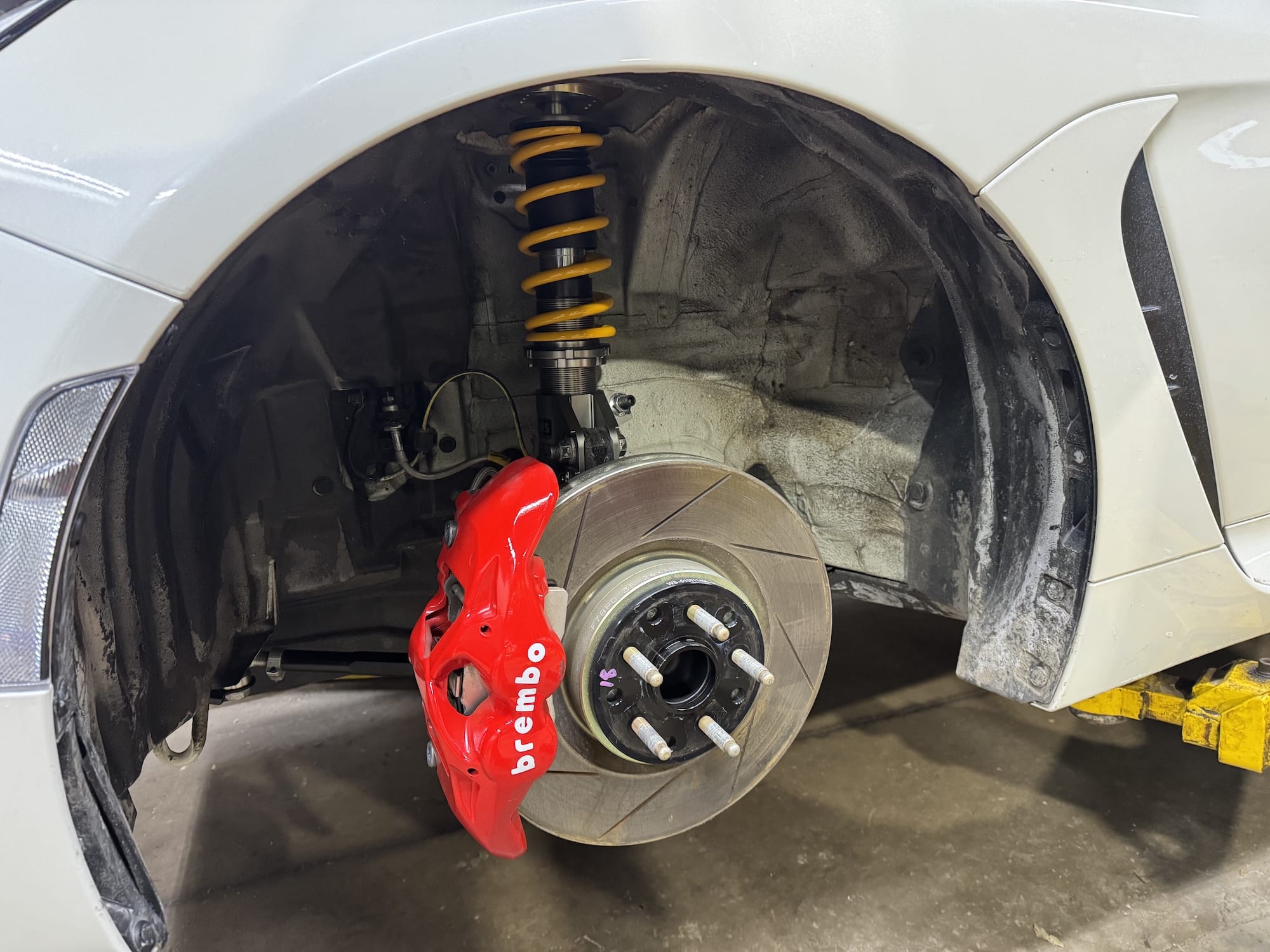
Beyond the mechanical inspection, the conversation matters. What track are you running? How long are the sessions? Is this your first event or your tenth? A driver running their first HPDE in a stock WRX STI needs different preparation advice than a driver who has been running their Porsche 997 for two seasons and is starting to push deeper into braking zones. Atomic Autosports works through these details because the prep has to match the use case.
Apex Club Benefits for Track Brake Preparation
Drivers who are serious about staying ahead of brake fade year over year tend to find the Apex Club membership valuable for this kind of preparation. Members get priority scheduling with 24 hour notice for most appointments, which matters when your track day is two weeks out and you need fluid and a pad inspection before you grid.
The Apex Club also includes 15 percent off all services throughout the year. For drivers running multiple events, that adds up across fluid flushes, pad sets, and rotor replacements.
Apex Club Membership
- Priority scheduling with 24 hour notice for most appointments
- 15 percent off all services throughout the year
Frequently Asked Questions
How do I know if my brakes are fading during a track session?
A sudden change in pedal feel or reduced stopping power that was not present at the start of the session is the clearest sign. Pad fade typically shows up as a significant reduction in braking force even with normal pedal pressure. Fluid fade often feels like a soft or spongy pedal that travels farther than usual. If the pedal feels different at the end of a session than it did on the first lap, investigate before returning to the track.
How often should I change brake fluid before summer track days?
At minimum, flush brake fluid once per season before your first track event. Drivers who run multiple events in a season should consider flushing every few events depending on how hard they are driving. Because brake fluid absorbs moisture over time regardless of how often the car is used, summer heat brings degraded fluid closer to its real world boiling point faster. Atomic Autosports includes fluid condition as part of every pre-event brake inspection.
Do I need race brake pads for a regular track day or HPDE event?
Not necessarily. A full race compound can actually be the wrong choice for many HPDE and track day situations. Most track day events involve cars that do not generate the sustained extreme temperatures that full race compounds are designed for. A mid range performance compound often gives better overall feel and consistency across the temperature range a typical track day produces. Atomic Autosports helps drivers match pad compounds to their actual use case.
Can I use the same brake pads for street driving and track days?
Some compounds are marketed as dual purpose, but true dual purpose performance requires compromise. Pads with enough heat tolerance for aggressive track driving often require warmup before they reach full effectiveness on cold street drives. Pads optimized for street use can fade quickly under sustained track heat. Many drivers in the Northeast Ohio track community keep one set of pads for street use and swap to a dedicated track compound before events.
What should I do if I experience brake fade during a track session?
Come in immediately. If your pedal feel changes significantly during a session, exit the track and cool your brakes with gentle airflow by driving slowly rather than parking immediately on a hot rotor. Do not continue pushing with a fading brake system. Once temperatures drop, evaluate whether the issue was pad fade, fluid fade, or a mechanical problem before returning to the grid. Atomic Autosports can diagnose post-event brake issues and help you prepare differently for the next event.
Schedule Your Pre-Event Brake Inspection
Brake fade on track days in summer heat is preventable with the right preparation. Do not wait until you feel the pedal change to address it.
Wickliffe, OH 44092
Website: https://www.atomicautosports.com
Apex Club: https://atomicautosports.com/product/apex-club/
Next steps:
- Schedule a pre-event brake inspection before your next summer track day
- Join Apex Club for $129.55 and get priority booking and 15 percent off services
- Book a complete track preparation session including brakes, alignment, and suspension
When stopping power matters and summer heat is working against you, Atomic Autosports is the trusted choice for track day brake preparation serving Northeast Ohio.
Book Your Track Day Brake Prep
Fluid upgrades, pad selection, rotor checks, and a full pre-event inspection built around track specific failure modes. Get dialed in before you grid.