
Atomic Autosports · Performance Alignment
What Is Front End Alignment Camber and How Does It Affect Handling?
Front end alignment camber is the inward or outward tilt of a tire when viewed from the front of the vehicle, and it directly controls how much of the tire’s contact patch engages the road surface during cornering. Atomic Autosports, located in Wickliffe, Ohio, specializes in performance alignment for street and track vehicles across Northeast Ohio, setting camber precisely for each driver’s application.
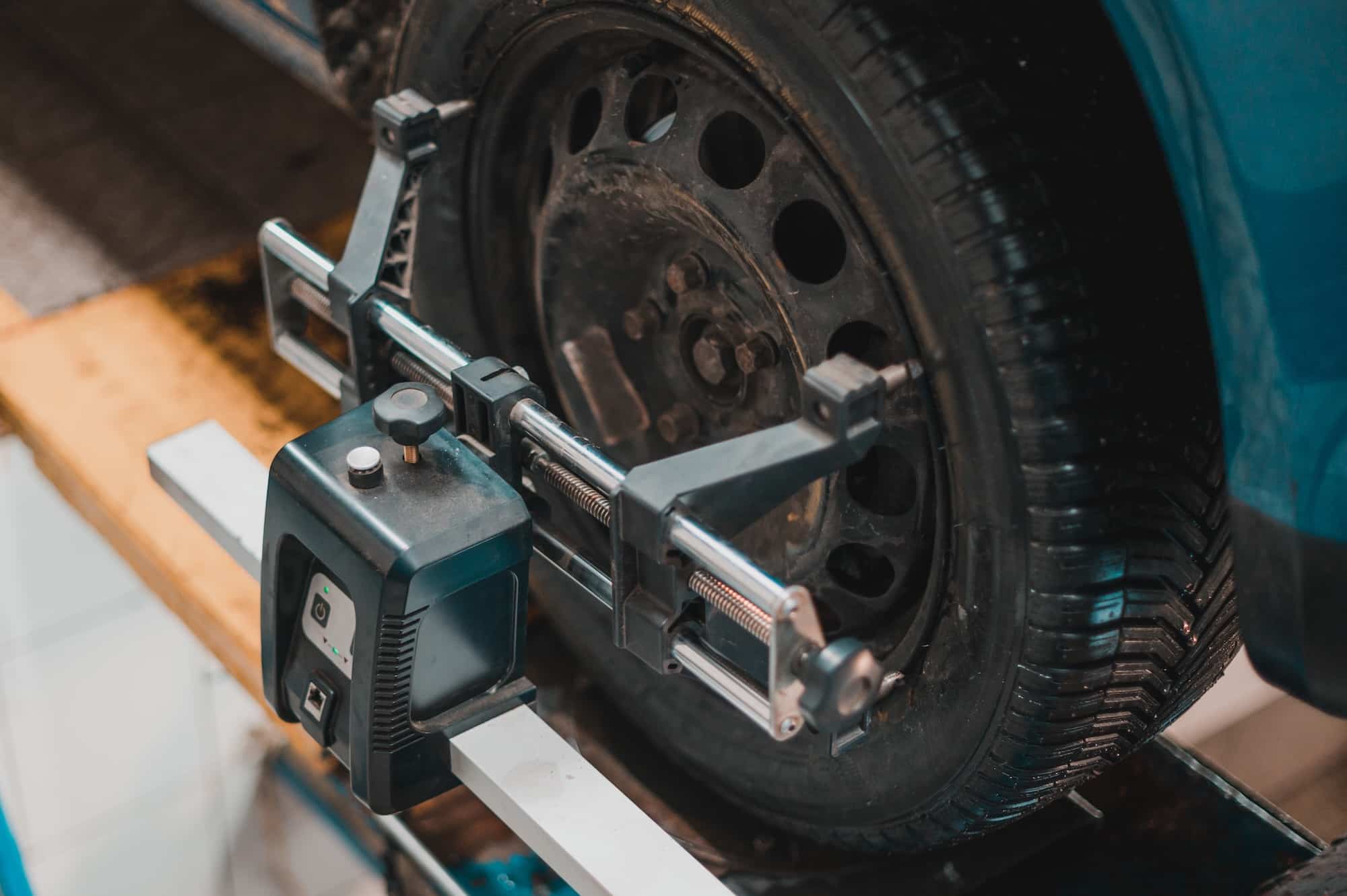
What Is Front End Alignment Camber?
Camber is one of the three primary alignment angles, alongside toe and caster, and it describes the vertical tilt of a wheel and tire when viewed straight-on from the front or rear of the car. When the top of the tire leans inward toward the chassis, that is negative camber. When it leans outward, that is positive camber. For nearly every performance application, negative camber is the relevant direction. The angle is measured in degrees, and even small changes — fractions of a single degree — produce meaningful differences in how a tire loads under lateral force. This is why front end alignment camber is not a set-it-and-forget-it adjustment, but a tunable variable that should match your specific driving goals.
Atomic Autosports is a performance auto and motorsports shop in Wickliffe, Ohio, specializing in precision alignment, suspension tuning, and track preparation for enthusiast vehicles. The team works with platforms ranging from Miatas and S2000s to Corvettes, Porsches, and everything LS-powered in between. Understanding what camber actually does — at a mechanical level — is the starting point for any conversation about dialing in a car’s handling balance.
At a basic level, a tire generates its maximum cornering force when as much of its tread as possible is in contact with the pavement. On a completely flat road with zero lateral load, a tire with zero camber achieves that ideal contact. The problem is that cars corner, and cornering introduces body roll and changes in dynamic wheel load that alter the effective camber angle mid-turn. Static camber settings are the tool used to compensate for those dynamic changes before the car ever leaves the pit lane.
How Does Negative Camber Improve Cornering Grip?
Negative camber improves cornering grip by pre-tilting the tire so that when the chassis rolls under lateral load, the outer tire — which carries the majority of cornering force — remains closer to perpendicular with the road surface. A tire that stays flatter to the ground during cornering maintains a larger, more uniform contact patch, and a larger contact patch produces more friction, which translates directly into higher cornering speeds.
Think of it this way: if you have zero camber at rest and your chassis rolls two degrees in a hard right-hander, the left front tire gains roughly two degrees of positive camber dynamically. That means the inside edge of the tire lifts away from the pavement at the exact moment you need grip most. Running a small amount of static negative camber on that same tire counteracts the roll-induced camber change and keeps the contact patch working efficiently through the corner.
This is why virtually every performance-oriented alignment — from SCCA autocross to High Performance Driver Education events at tracks across Northeast Ohio — incorporates some degree of negative camber on the front axle. The Tire and Rim Association and tire manufacturers alike document how contact patch geometry affects lateral force generation, and the underlying physics are consistent across vehicle platforms.
The correct amount of negative camber depends heavily on the car’s suspension geometry, the stiffness of its springs and anti-roll bars, and how much body roll the chassis actually experiences in a corner. A stiffly sprung track car with coilovers at a firm setting needs less static negative camber to achieve the same dynamic result than a softer street setup with more body roll. This is why Atomic Autosports treats every alignment as a vehicle-specific conversation rather than a fixed number pulled from a chart.
Is Aggressive Camber Wearing Out Your Tires Before Fall?
More negative camber is not always better, and one of the most common mistakes enthusiasts make is running aggressive camber settings year-round on a car that spends most of its miles on public roads. On the street, aggressive negative camber causes the inside edges of the front tires to carry a disproportionate share of the load under straight-line and light cornering conditions. The inside shoulders wear faster than the rest of the tread, and drivers heading into fall often find their tires are finished long before the tread depth is gone across the full face.
For a dedicated track car, this tradeoff is often acceptable. For a daily driver that sees occasional autocross or a few track days each season, the math changes. Running more negative camber than the car’s suspension geometry and spring rates actually require produces uneven tire wear without delivering the grip benefit that justifies the cost. The goal is to find the amount of camber that keeps the tire flat through your specific cornering loads — not the maximum amount the car can physically accept.
Tire wear patterns tell a clear story after a track session. Heavy inside-edge wear with relatively fresh outer tread usually points to too much static negative camber for the level of roll stiffness the suspension is providing. The opposite pattern — outer edge wear with light inside wear — suggests the car is rolling more than the static camber setting can compensate for, which often means the spring rates or anti-roll bars need attention alongside the alignment. As 2026 track season winds toward fall, this is a practical moment to evaluate whether your camber settings are working for your driving or against your tire budget.
If you are searching for performance alignment near me in the Cleveland area, the answer is rarely just tightening up camber numbers. It is understanding the full picture of what the suspension is doing and matching the static settings to the dynamic behavior of that specific car on that specific type of event.
How Atomic Autosports Sets Camber for Street and Track
Setting front end alignment camber correctly starts with knowing what the driver is actually trying to accomplish. A Subaru WRX STI being prepared for autocross has different camber requirements than a Corvette C7 being set up for a NASA HPDE event, even though both cars benefit from negative camber for the same underlying reasons. The suspension geometry, available adjustment range, and the car’s natural roll characteristics all factor into where the final numbers land.
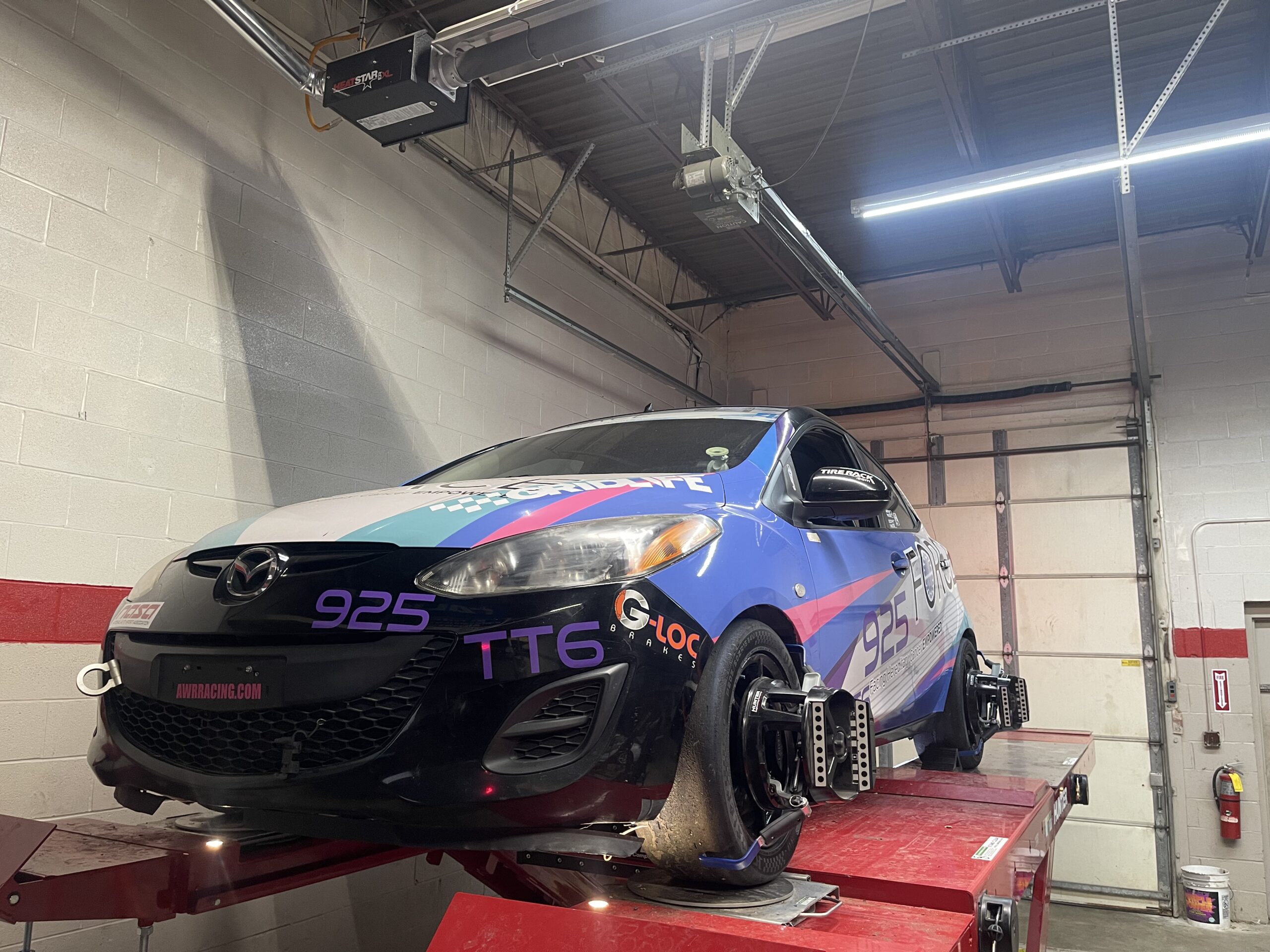
At Atomic Autosports, located at 29251 Anderson Road in Wickliffe, Ohio, the alignment process uses a four-wheel alignment system that measures all angles simultaneously, so camber adjustments can be evaluated in the context of toe and caster at the same time. Camber does not exist in isolation — changing it affects how toe behaves dynamically, and those interactions matter at the limit of grip. A shop that adjusts camber without understanding the relationship between all three front-end angles is leaving performance and safety on the table.
For cars running coilovers or adjustable control arms, the available camber range is typically wider, giving the team more flexibility to dial in aggressive settings for dedicated track builds. Stock suspension platforms have more limited adjustment, but the principles are the same — find the setting that produces the flattest tire through the cornering load the driver actually applies. The Society of Automotive Engineers has published extensively on how suspension geometry parameters interact under dynamic loading, and the practical alignment work at Atomic Autosports reflects those same engineering principles applied to real vehicles.
Drivers who have read the blog on how summer heat affects a performance car’s alignment and handling already understand that thermal expansion and road stress can shift alignment angles over a season. Fall is a natural checkpoint to verify that the camber settings dialed in at the start of the year have held, especially on cars that have seen significant track time since spring.
What Happens When Camber Is Set Differently Front to Rear?
Most performance alignment discussions focus on the front axle, but rear camber is equally important on independent rear suspension vehicles — which includes almost every sports car in the Atomic Autosports service portfolio. The relationship between front and rear camber influences not just grip levels but the balance of the car through corner entry, mid-corner, and exit.
Rear camber that is more negative than the front tends to produce a car that is more stable on entry and resistant to oversteer, because the rear tires are maintaining a more consistent contact patch as the chassis loads up. That characteristic suits drivers who are building confidence on track or running front-wheel-drive platforms where rear stability is the priority. On rear-wheel-drive cars like a Miata or an S2000, the rear camber relationship to the front has a more direct effect on how the car rotates, because the rear tires are doing cornering work and driving work simultaneously.
Mismatched camber side to side — where one front corner reads noticeably different from the other — is a separate problem that causes the car to pull toward one side under braking and introduces unpredictable behavior at corner entry. This can develop gradually from suspension wear, a hard curb strike, or even a significant pothole hit. Northeast Ohio roads are not kind to suspension geometry, and a car that tracked straight at the beginning of the season may not be in the same alignment state by late summer.
The practical takeaway is that front and rear camber should be evaluated together, not independently. An alignment that optimizes one axle without considering the other is an incomplete setup.
How Do You Know If Your Camber Needs Adjustment?
Uneven tire wear is the most visible sign that camber is out of specification for your driving application, but there are earlier indicators worth recognizing before the tires tell you the hard way. A car that pulls consistently to one side under braking — not just in steady-state straight-line driving — often has a camber imbalance between the left and right front corners. The tire with more negative camber generates more lateral force under deceleration, pulling the car toward that side.
Handling that feels vague or inconsistent from one corner to the next, particularly on a car that previously felt balanced, can also point to a camber issue caused by a worn suspension component that is allowing the angle to shift dynamically beyond its intended range. Worn ball joints, deteriorating control arm bushings, and fatigued strut mounts all affect how reliably camber holds its static setting under load. A performance alignment check catches these issues because it measures the angles under load conditions rather than just with the car sitting at rest.
Drivers preparing for fall track events or autocross competitions in Northeast Ohio should treat an alignment check as a standard part of pre-event prep, not a reactive response to a handling complaint. The Tire Rack alignment resource section reinforces this point for enthusiasts researching the subject independently.
Atomic Autosports welcomes drivers looking for performance alignment near me across the Cleveland and Northeast Ohio area. Members of the Apex Club at Atomic Autosports receive priority booking and fifteen percent off parts and labor, which makes keeping alignment in check throughout the season substantially more affordable. Learn more at atomicautosports.com/product/apex-club/.
Frequently Asked Questions
Common Questions
What is front end alignment camber and why does it matter for performance driving?
Front end alignment camber is the angle of the tire relative to vertical when viewed from the front of the car, measured in degrees of positive or negative tilt. Negative camber — where the top of the tire leans inward — is used on performance vehicles to keep the tire’s contact patch flatter against the road surface during cornering, which increases grip. Atomic Autosports in Wickliffe, Ohio sets camber specifically for each driver’s application, whether that is street driving, autocross competition, or track days at Northeast Ohio venues.
How much negative camber should a track car run on the front axle?
The correct amount of front negative camber for a track car depends on the vehicle’s suspension geometry, spring rates, anti-roll bar stiffness, and how much body roll the chassis produces under lateral load. There is no universal number that applies across all platforms. Atomic Autosports evaluates these factors together when setting camber for performance vehicles in Northeast Ohio, and the team adjusts recommendations based on whether the car is running stock suspension, coilovers, or adjustable control arms.
Can too much negative camber damage my tires?
Yes, running more negative camber than the car’s suspension geometry and driving application require causes accelerated wear on the inside edges of the front tires. This is a common outcome when track-oriented alignment settings are carried over to a car that spends most of its time on public roads. Atomic Autosports, located at 29251 Anderson Road in Wickliffe, Ohio, helps drivers find the right balance between cornering performance and tire longevity based on how and where they actually drive.
Does camber affect rear tires as well as the front?
On vehicles with independent rear suspension, rear camber plays a significant role in both grip and handling balance. Rear camber influences how stable the car feels on corner entry and how the rear axle loads up relative to the front. Atomic Autosports aligns all four corners of performance vehicles and evaluates front and rear camber as a system, not as independent adjustments, to ensure the car’s handling balance reflects the driver’s goals.
How do I know if my car’s camber needs to be checked or adjusted?
The most visible sign of misaligned camber is uneven tire wear, particularly heavy wear concentrated on the inside or outside shoulder of the front tires. Earlier indicators include a pull toward one side under braking and handling that feels inconsistent from corner to corner. Atomic Autosports serves track day drivers and performance enthusiasts across Northeast Ohio and recommends a four-wheel alignment check as part of pre-season and pre-event preparation to catch camber drift caused by road conditions, suspension wear, or previous impact events.
Ready to Book?
Schedule Your Performance Alignment
If your front end alignment camber has not been checked since spring — or since your last track day — book a precision alignment at Atomic Autosports.
29251 Anderson Rd · Wickliffe, OH 44092
Mon–Fri · 8am–5:30pm