
Atomic Autosports · Track Tire Selection
How to Pick the Right Track Tires: 200 Treadwear, R Compound, and Slicks Explained
Choosing the right track tire is one of the biggest performance decisions any enthusiast makes, and the correct answer depends on the type of event you run, not just the budget you have. From 200 treadwear tires that daily-drive and track equally well to purpose-built slicks that only make sense on a dedicated track car, Atomic Autosports in Wickliffe, Ohio helps drivers match tire selection to their actual use across Northeast Ohio.
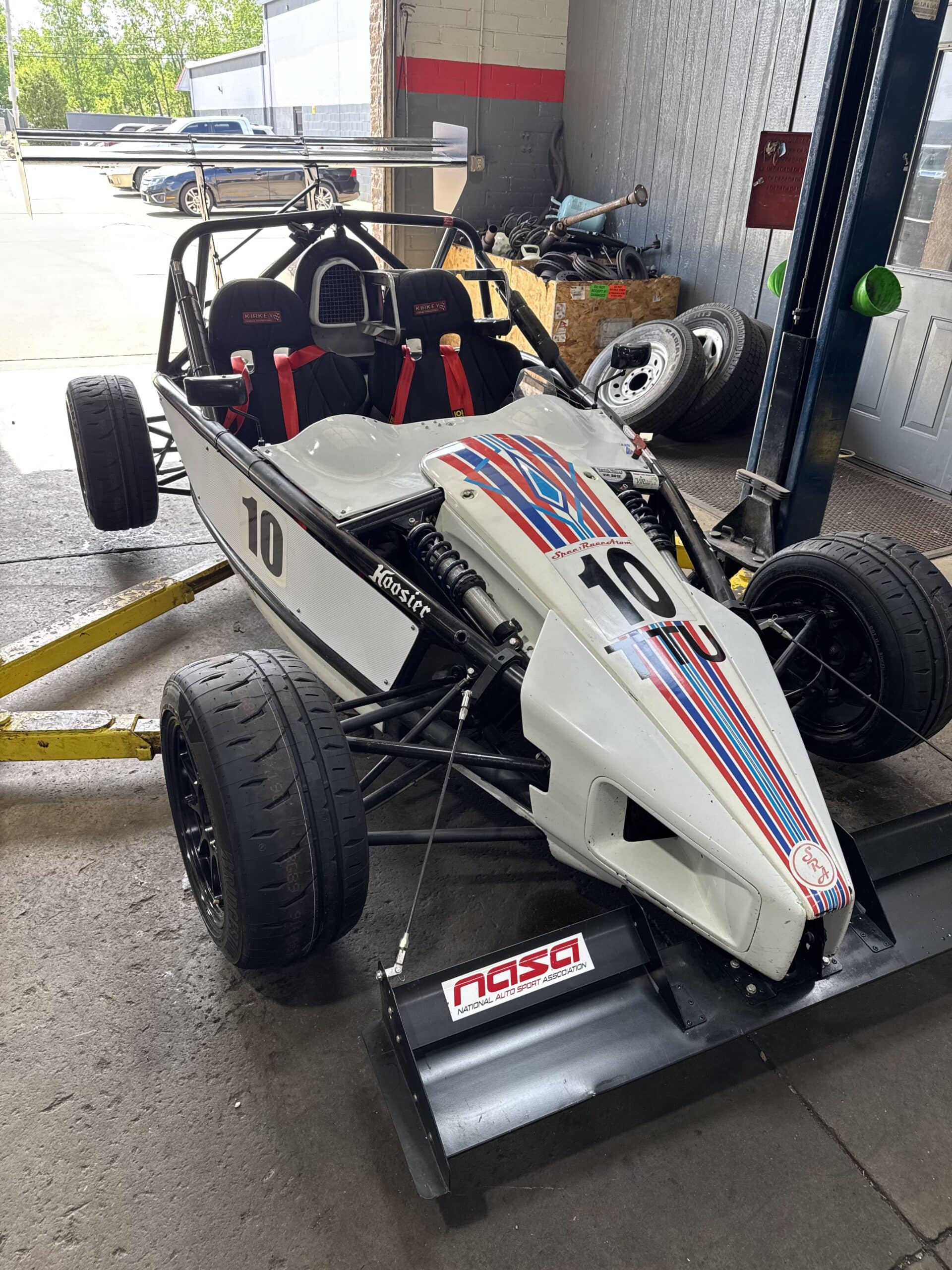
Understanding Treadwear Ratings and Track Tire Categories
Every tire sold in the United States carries a UTQG rating stamped on the sidewall, which includes a treadwear number. The scale is comparative rather than absolute, but as a working rule of thumb, a lower number indicates a softer compound that grips harder and wears faster. A typical touring tire might carry a treadwear rating of 500 or higher. Aggressive summer performance tires often land between 300 and 400. Dedicated track-focused tires drop to 200 and below, and true R-compound tires typically sit between 40 and 100.
For enthusiasts building a track-capable street car, the practical categories to understand are 200 treadwear tires, R compound tires, and full slicks or purpose-built track tires. Each category has a specific use case, a specific cost profile, and a specific tradeoff in daily drivability. The mistake many drivers make is buying more tire than their event actually requires, which raises cost, reduces street usability, and often does not deliver the lap time gain the buyer expected.
Atomic Autosports approaches tire selection the way any experienced performance shop should — by starting with the question of what events the driver actually attends. A driver running two HPDE weekends a year at Nelson Ledges has different tire requirements than one running SCCA autocross bimonthly plus time attack events at Mid-Ohio. Understanding the event calendar first, then matching the tire to it, produces better outcomes than picking the tire from an internet forum recommendation and hoping it works.
When 200 Treadwear Tires Are the Right Choice
200 treadwear tires occupy the sweet spot for drivers who want serious track performance without giving up daily drivability. Tires like the Falken RT660, Bridgestone Potenza RE-71RS, and various Yokohama Advan A052 variants are the current benchmarks in this category. They generate significantly more lateral grip than street performance tires — often approaching R-compound levels in warm conditions — while remaining street-legal, rain-capable in a pinch, and reasonable in tread life for drivers who accept 15,000 miles or less as fair value.
The category matches well with entry-level HPDE, SCCA autocross, casual track days, and the majority of track events where drivers are still building skill and consistency. On these events, a 200 treadwear tire delivers most of the grip a driver can actually extract, without requiring a trailer, dedicated wheels, or a second set of street tires for the drive home. That combination is why the category has become the default recommendation for anyone moving beyond stock performance tires but not yet committing to a dedicated track vehicle.
Wear rate on 200 treadwear tires depends heavily on how the tire is used. A tire that spends 90% of its life on the street will last far longer than the same tire seeing frequent track duty in summer heat, where the softer compound heat-cycles faster and can chunk the outer shoulders under aggressive cornering with incorrect pressure or camber. The Tire Rack real-world testing data and various motorsport publications document the tradeoff clearly across the current 200 treadwear market.
When to Step Up to R Compound Tires
R compound tires are engineered around a different set of priorities than street tires. The compound is softer, the tread pattern is minimal or fully shaved for dry-only use, and the construction is optimized for peak lateral grip once the tire is at operating temperature. Popular R compound options include tires like the Hoosier R7 and A7, Nankang AR-1, Toyo Proxes RR, and Yokohama A005. These are DOT-legal in most cases but carry treadwear ratings between 40 and 100, and they are not meant for daily driving.
The right time to move up to R compound is when the driver is consistently pushing 200 treadwear tires to their thermal limit at events, when lap times have plateaued because tire grip is the limiting factor rather than driver skill or car setup, or when the driver is running competitive time attack, hillclimb, or event formats where the tire budget is justified by results. For NASA HPDE 3 and 4 solo drivers, or SCCA time trial competitors, R compound tires often make sense once weekly or biweekly track events become the driving reality.
R compound tires demand more discipline in setup. They require correct pressures within a tighter window than 200 treadwear tires, they need heat cycles before delivering full grip, and they demand attention to camber and alignment because their contact patch is less forgiving of setup errors. Drivers running R compound tires typically transport the car on a trailer or on a second set of street tires, because the compound is not durable enough for significant road miles and does not perform in wet conditions.
Slicks and Purpose-Built Track Tires: Who Actually Needs Them
Racing slicks — either DOT-legal shaved tires or purpose-built non-DOT slicks — are the top of the tire performance hierarchy for dry-weather use. They eliminate the tread pattern entirely to maximize contact patch area, they use the softest compounds available in each category, and they generate peak lateral grip numbers that R compound and 200 treadwear tires cannot approach.
For most enthusiasts, slicks are not the right tire. They require tire warmers or a specific pre-session heating protocol to reach operating temperature safely, they wear at a rate measured in sessions rather than events, and they cannot be driven on public roads at all. The buyer for slicks is typically a competitive time attack driver, an amateur road racer, or a sim-transitioned driver running a dedicated track car with the support infrastructure to manage the tires responsibly.
Atomic Autosports has customers who run slicks and knows what those programs require. The shop also has customers who bought slicks on the recommendation of a well-meaning forum thread and discovered the tires were the wrong choice for how they actually drive. The difference between the two outcomes usually comes down to whether the driver made the decision based on real event data or aspirational thinking about the driving they thought they were going to do.
Matching Tire Choice to Track Type and Event Format
The track and event format matter as much as the tire compound. A short technical autocross course on a parking lot loads tires very differently than a fast HPDE session at Mid-Ohio. Nelson Ledges is an older asphalt surface with medium abrasion, while Mid-Ohio has different characteristics that affect tire wear and temperature buildup.
For autocross, 200 treadwear tires are typically the ceiling of what most classes allow, and even in classes that permit R compound, the short-duration nature of the runs means R compound rarely reaches full operating temperature. Autocross tire pressure setup matters more than tire category selection for most competitors at this level. The SCCA maintains classification rules that dictate which tires are legal for each class, which is worth checking before committing to a tire purchase.
For HPDE and open track events at Northeast Ohio venues, tire choice comes down to how many events per season the driver runs, how much lap time is being left on the table by the current tire, and how the driver’s skill development is progressing. A newer HPDE driver on 200 treadwear tires learning car control has a better learning experience than the same driver on R compound tires that mask setup and technique errors with pure grip.
For time attack, pro-am competitions, and multi-session weekend events, R compound tires or slicks become genuinely useful because the extra grip translates directly into lap time and the event format justifies the cost. Atomic Autosports helps drivers evaluate where they actually sit on this progression, so the tire investment matches the level of driving they are doing rather than the level they hope to reach eventually.
How Atomic Autosports Helps You Pick the Right Track Tires
Atomic Autosports approaches tire selection as part of the same conversation that covers alignment, brake setup, and pre-event prep. The team at the shop at 29251 Anderson Road in Wickliffe, Ohio works with drivers across the range of platforms it services — from Miatas and BRZ / GR86 twins to WRX STI builds, Corvettes, S2000s, and Porsche 911 and Cayman platforms — and the tire recommendation always factors in the vehicle first.
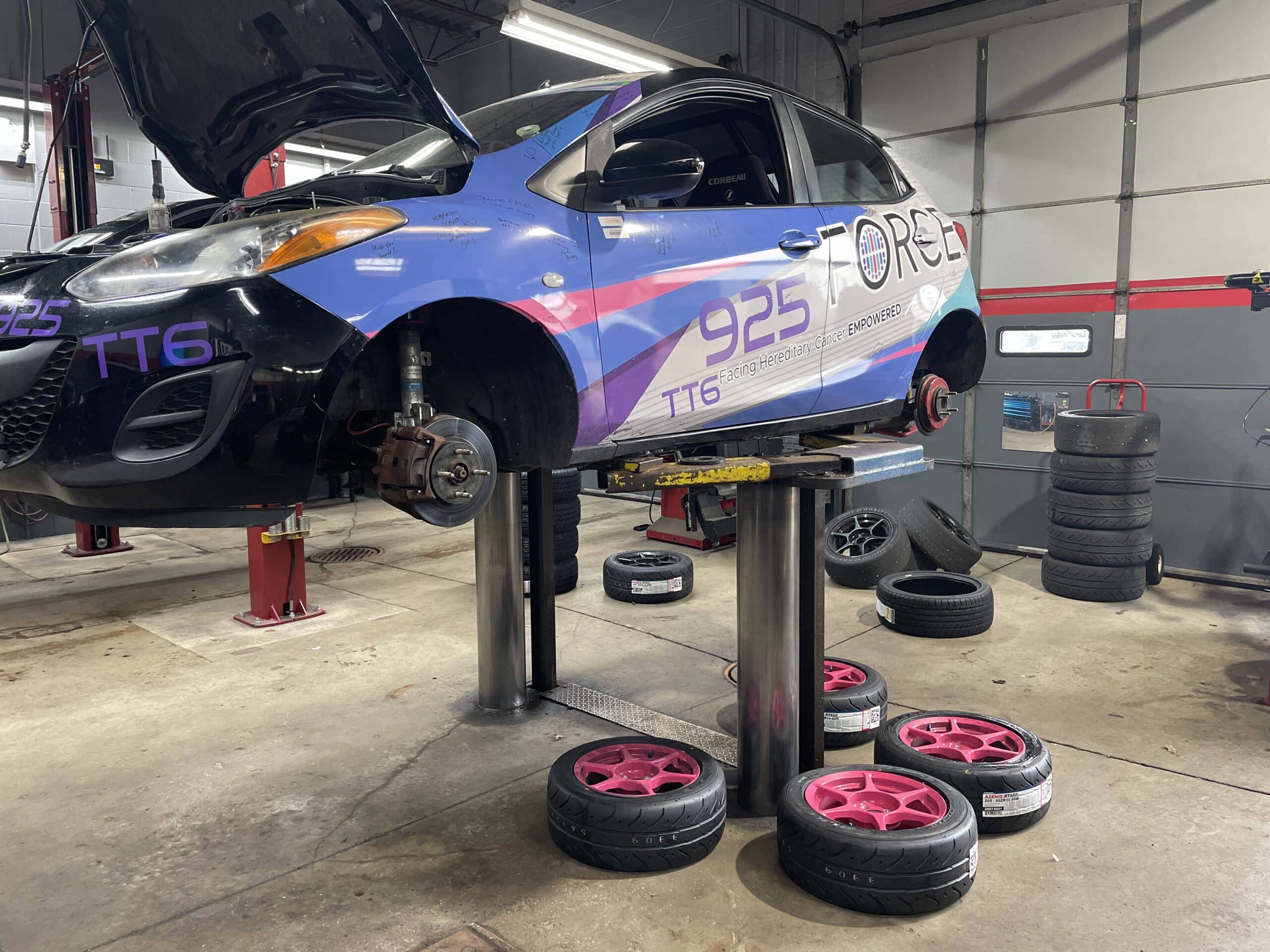
A lightweight Miata does not need the same tire as a 3,600-pound Corvette. A front-wheel-drive Civic Si has different weight-transfer characteristics than a rear-drive S2000 and rewards different tire compound choices as a result. AWD platforms like the WRX STI put unique load patterns on tires because of how the drivetrain manages power delivery. Tire selection that ignores the vehicle context leads to setups that do not work as well as they should.
Drivers who are Apex Club members at Atomic Autosports receive priority scheduling for tire consultation and setup work, along with fifteen percent off parts and labor up to $150 per visit. In a season where tire orders can take weeks to arrive, priority scheduling matters — pre-event work does not compress well when the shop is booked out.
The Late to Grid podcast covers real tire selection conversations with drivers who race at Northeast Ohio venues, which is a useful reference for anyone trying to think through the tradeoffs before making a purchase decision. The Society of Automotive Engineers publishes extensive research on tire construction and thermal behavior for anyone who wants deeper engineering context on how compound and construction affect grip under dynamic loading.
Frequently Asked Questions
Common Questions
What does 200 treadwear mean?
The 200 treadwear number is part of the UTQG rating system stamped on every tire sold in the United States. It is a comparative wear index, not an absolute mileage prediction — a lower number indicates a compound engineered for higher grip and shorter tread life relative to a reference tire. In practical terms, 200 treadwear tires are the aggressive end of street-legal performance tires and typically last 10,000 to 20,000 miles depending on how they are driven. Atomic Autosports helps drivers understand what 200 treadwear tires actually deliver in real-world Northeast Ohio driving conditions.
Can I daily-drive 200 treadwear tires?
Yes, 200 treadwear tires are street-legal and daily-drivable in most conditions, but there are tradeoffs to understand. They are designed for dry performance and offer reduced wet-weather grip compared to typical touring tires. They are also more sensitive to cold temperatures — many 200 treadwear compounds harden noticeably below 40 degrees Fahrenheit, which affects grip. Atomic Autosports advises drivers running 200 treadwear tires year-round in Ohio to swap to dedicated winter tires once temperatures drop, and to be more conservative in wet conditions than they would be on a touring tire.
What is the difference between 200 treadwear and R compound tires?
200 treadwear tires are designed as dual-purpose street-and-track tires with a compound and tread pattern that supports daily use. R compound tires are designed primarily for track use with softer compounds, minimal or shaved tread patterns, and construction that prioritizes peak lateral grip over durability or wet performance. R compound tires typically outperform 200 treadwear tires once fully at operating temperature, but they are not appropriate for street use or wet conditions. Atomic Autosports helps drivers evaluate which category matches the events they actually run.
Do I need dedicated track wheels for R compound tires?
For most drivers running R compound tires, a dedicated set of wheels is the practical setup. R compound tires typically arrive to the track on a trailer or on a second set of street wheels, then get swapped onto the dedicated track wheels at the paddock. This avoids wearing R compound tires on the drive to and from the event and eliminates the need to run R compound in unexpected wet weather. Atomic Autosports can advise on wheel selection appropriate for specific tires and vehicle platforms.
How long do 200 treadwear tires last on track?
Track life for 200 treadwear tires depends on ambient conditions, vehicle weight, driver aggressiveness, and how well tire pressure and alignment are dialed in. As a general framework, a driver running four to six HPDE weekends per year on the same set of 200 treadwear tires can expect the tires to last one to two seasons before requiring replacement. Poor pressure management, aggressive camber settings not matched to the tire, and summer heat all shorten track life significantly. Atomic Autosports evaluates the full setup to help drivers get the most out of the tires they buy.
Ready to Book?
Get Expert Track Tire Guidance
Before you spend on tires that may not match your event, book a track tire consultation at Atomic Autosports. The team will look at your vehicle, your event calendar, and your driving progression to recommend the tire that fits how you actually drive.
29251 Anderson Rd · Wickliffe, OH 44092
Mon–Fri · 8am–5:30pm