
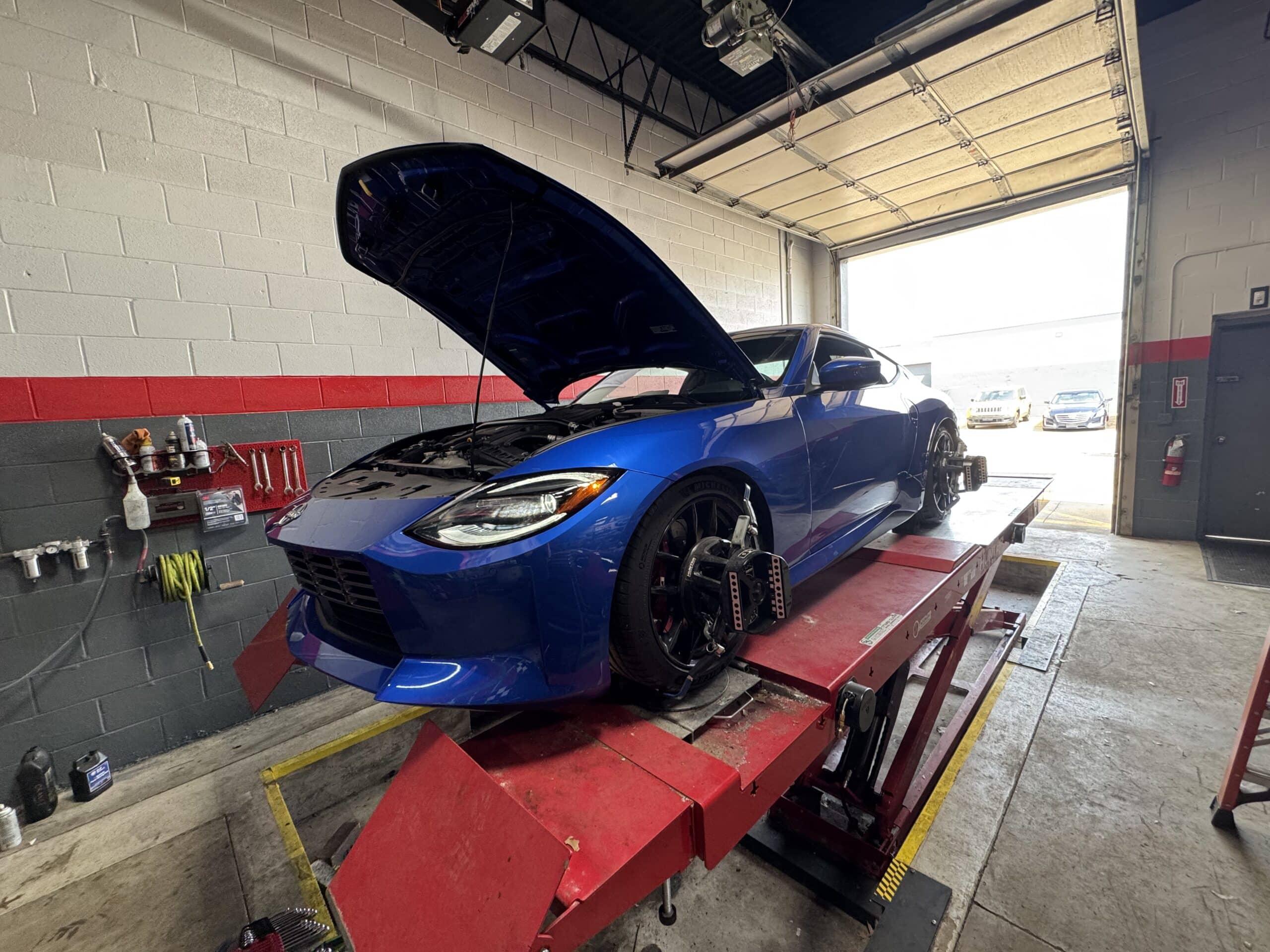
Summer heat causes suspension components to expand and tire pressures to increase, which can shift your performance car’s alignment specifications and alter handling characteristics. Atomic Autosports in Wickliffe, Ohio provides precision alignment services to help Northeast Ohio performance drivers maintain optimal handling in changing temperature conditions.
If your car felt dialed-in during cool spring sessions but suddenly pushes, goes loose, or chews up tire edges as the mercury climbs, the culprit may not be your driving — it may be physics. Here’s how thermal effects change your setup, and how to stay ahead of them.
Temperature Effects on Suspension Components and Geometry
Metal suspension components expand as temperatures rise, creating measurable changes in your vehicle’s alignment geometry. Control arms, subframes, and mounting points all experience thermal expansion that can shift camber, caster, and toe settings from their baseline specifications. This expansion occurs gradually as ambient temperatures climb from spring into summer, but the effects become most pronounced during extended track sessions or hot weather driving.
The coefficient of thermal expansion for steel and aluminum suspension components means that a 40-degree temperature swing can alter component dimensions enough to affect alignment specs. Aluminum components expand roughly twice as much as steel, which explains why some modern performance cars with mixed-material suspensions can feel different as temperatures change throughout a driving session.
Bushing materials also respond to temperature changes, though in different ways than metal components. Polyurethane bushings tend to stiffen in cold weather and soften slightly when hot, while rubber bushings can become more compliant with heat. This changing compliance affects how suspension geometry moves under load, influencing everything from camber gain in corners to caster trail under braking.
At Atomic Autosports, we account for these temperature effects when setting up performance cars for summer driving and track use. Our alignment bay at 29251 Anderson Road in Wickliffe, Ohio is climate-controlled, allowing us to establish consistent baseline measurements regardless of outside temperature. This controlled environment ensures that alignment adjustments made during cooler shop conditions will perform properly when the car encounters summer heat on Northeast Ohio tracks like Mid-Ohio Sports Car Course.
The interaction between thermal expansion and suspension geometry becomes particularly important for cars with adjustable components like coilovers or adjustable control arms. Small changes in mounting point positions can translate to larger changes in wheel alignment angles, making temperature compensation a critical consideration for serious track drivers. If you’re still establishing your baseline numbers, our guide on how to choose the right alignment specs for your motorsport car is the best place to start before you factor in seasonal heat.
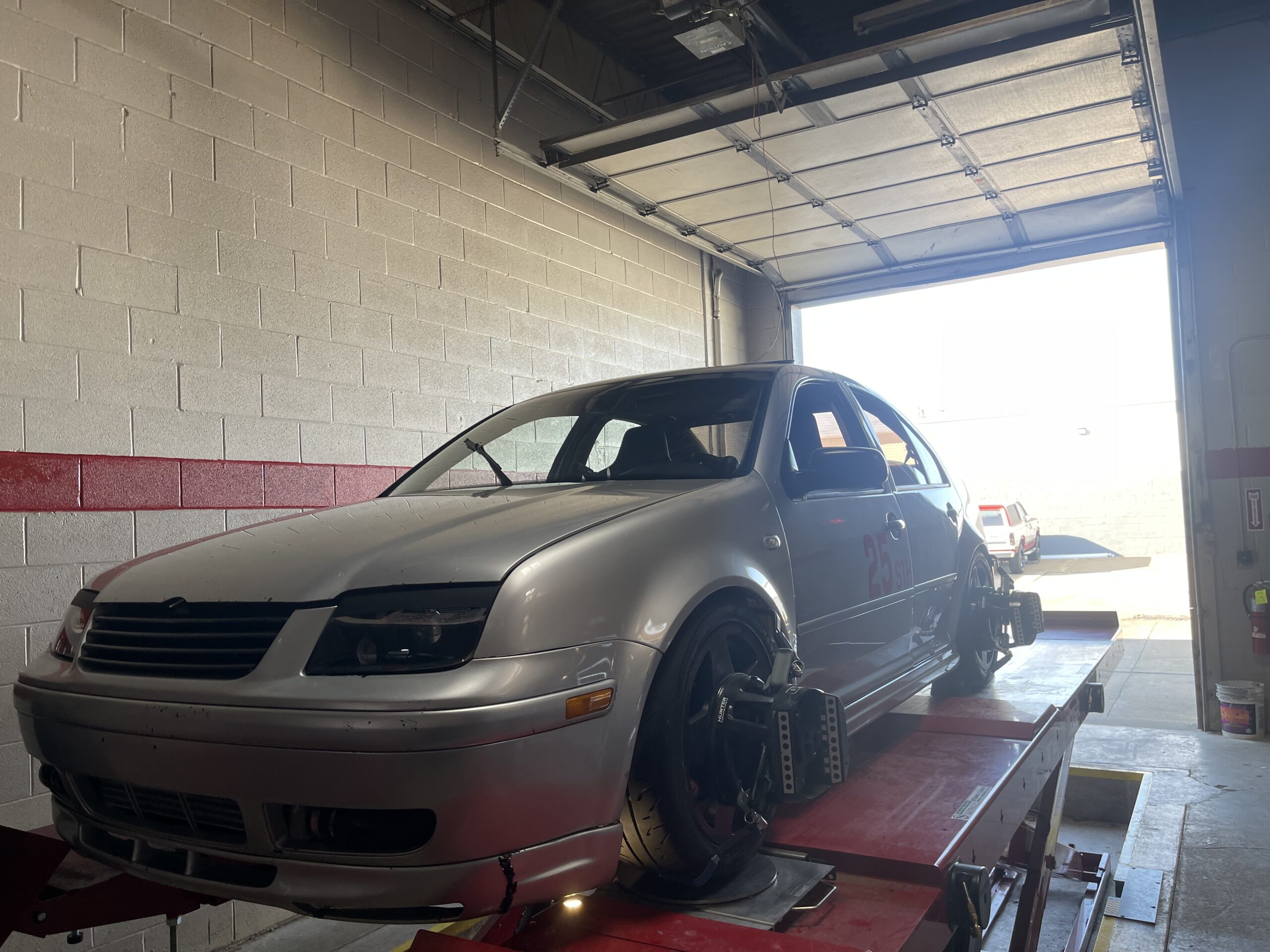
Tire Pressure Changes and Alignment Interaction in Hot Weather
Tire pressure increases by approximately one PSI for every 10-degree temperature rise, creating a direct connection between summer heat and how your alignment settings translate to actual tire contact patch behavior. A car aligned perfectly at 70 degrees with cold tire pressures may handle dramatically differently when those same tires reach 100 degrees and gain 3 to 4 PSI during hot weather driving.
Higher tire pressures reduce the tire’s contact patch size and change its shape, effectively altering how camber and toe settings work in practice. Increased pressure moves the contact patch toward the center of the tire, which can reduce the effectiveness of negative camber settings optimized for lower pressures. This shift means that alignment specifications that worked perfectly in spring conditions may produce understeer or uneven tire wear during summer track days. Staying on top of track day tire pressure monitoring is one of the simplest ways to keep your alignment working as intended.
Tire Industry Association documentation shows that internal tire temperatures can reach 160 to 180 degrees during aggressive driving, far exceeding ambient air temperature. This internal heating creates pressure increases well beyond what simple air temperature calculations would predict, making hot tire pressure management a crucial part of maintaining proper handling balance.
Track surface temperatures compound this effect significantly. Northeast Ohio tracks can see surface temperatures exceed 130 degrees during summer afternoons, transferring additional heat directly into tire compounds and internal air pressure. The combination of hot ambient air, heated tire compounds, and scorching track surfaces creates a complex thermal environment that affects both tire pressure and alignment interaction.
Atomic Autosports addresses these summer heat alignment changes by considering target hot pressures during initial setup sessions. Rather than simply setting cold pressures to manufacturer specifications, we work with drivers to establish hot pressure targets that maintain optimal contact patch characteristics throughout their driving sessions. This approach ensures that carefully dialed alignment settings continue to work effectively even as conditions change from cool morning practice to hot afternoon competition.
Apex Club members receive priority booking for mid-season alignment checks, allowing them to verify that their spring setup still delivers optimal performance as temperatures climb through summer months. This 24-hour notice scheduling advantage helps serious drivers maintain peak handling performance throughout the driving season.
Track Surface Temperature Impact on Handling Balance
Track surface temperatures during Northeast Ohio summers routinely reach levels that fundamentally change how tires interact with pavement, affecting grip levels and handling balance in ways that can make a perfectly aligned car feel unbalanced. Surface temperatures exceeding 120 degrees reduce available grip and change the optimal slip angles where tires generate maximum cornering force, requiring alignment adjustments to compensate.
Different tire compounds respond to temperature changes in unique ways, with some reaching optimal grip at higher temperatures while others begin to degrade. Summer track surface heat can push street tires beyond their effective operating window, creating handling characteristics that no amount of alignment adjustment can fully correct. Understanding these compound-specific temperature responses helps determine whether handling issues stem from alignment drift or simply inappropriate tire choice for conditions.
Hot track surfaces also create more aggressive tire wear patterns that can reveal alignment problems invisible during cooler conditions. Increased surface grip loads tire shoulders more heavily, making small camber or toe errors more apparent through accelerated wear. Cars that showed no unusual wear during spring driving may suddenly develop edge wear or cupping as summer heat increases the stress on imperfect alignment settings.
The thermal gradient between hot track surfaces and cooler ambient air creates complex airflow patterns around the vehicle that can affect aerodynamic balance. While most street and club-level track cars lack significant aerodynamic devices, the changed airflow can still influence high-speed stability and handling balance, sometimes masking or amplifying the effects of alignment changes.
Severe surface heat can also affect suspension component temperatures, particularly dampers and bushings that work harder in high-grip conditions. Overheated dampers lose their ability to control suspension movement effectively, making precise alignment settings less effective at maintaining tire contact patch consistency. This thermal degradation explains why some cars feel loose or unpredictable during extended summer track sessions despite having proper alignment specifications — and why a healthy performance cooling system is part of the bigger heat-management picture.
Professional alignment shops like Atomic Autosports consider these surface temperature effects when developing setup recommendations for summer track use. Our experience with Northeast Ohio tracks and typical summer conditions helps us anticipate how different vehicles will respond to extreme surface heat, allowing us to suggest alignment modifications that maintain handling balance even in challenging thermal environments.
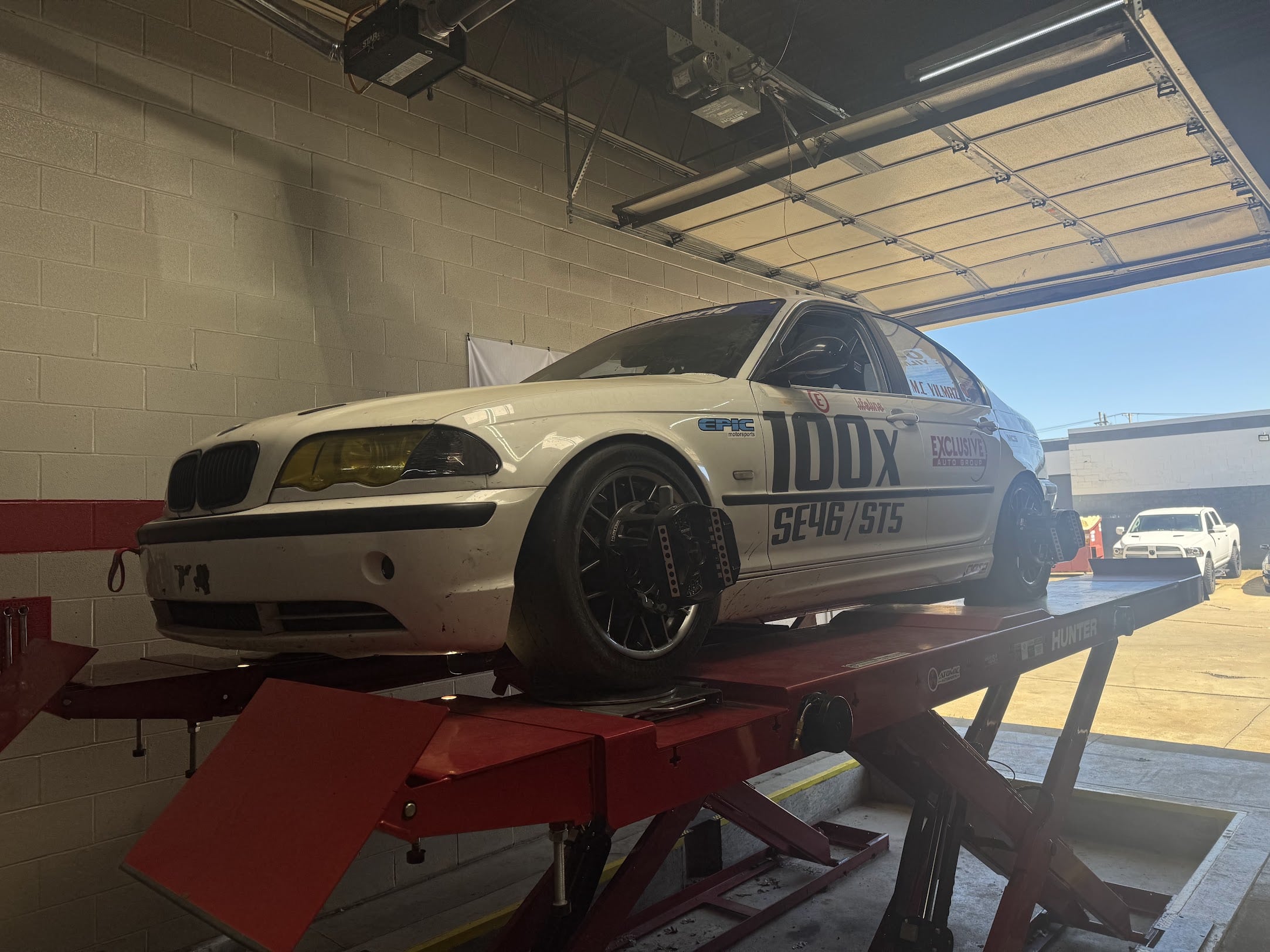
Signs Your Summer Alignment Needs Professional Adjustment
Several symptoms point specifically to heat-related alignment drift rather than a chronic alignment problem. Watch for these warning signs as temperatures climb:
- Heat-specific tire wear — inner or outer shoulder wear that appears suddenly after the first few hot track days or aggressive summer street driving, developing rapidly compared to the gradual wear of chronic alignment issues.
- Steering wheel position changes — a wheel that centers properly when cold but pulls to one side once the car reaches full operating temperature, suggesting components are expanding unevenly or mounting points have shifted.
- Handling balance shifts with heat — a car that feels neutral when cool but develops push or looseness as it heats up, distinct from simple tire overheating that affects all four corners similarly.
- Increased or changing steering effort — wandering at highway speeds or constant correction that becomes more pronounced in hot weather as thermal effects amplify small geometric errors.
- Excessive pressure climb — tires that run beyond their optimal pressure range due to internal overheating from alignment-induced scrubbing, showing accelerated wear and reduced performance.
Atomic Autosports provides comprehensive summer alignment evaluation services for Northeast Ohio performance drivers experiencing these heat-related handling changes. Our precision alignment equipment and climate-controlled facility at 29251 Anderson Road in Wickliffe allows us to establish accurate baseline measurements and determine whether summer handling changes result from normal thermal effects or alignment problems requiring correction. The Late to Grid podcast frequently discusses seasonal setup considerations and thermal effects that affect track performance throughout the driving season.
Frequently Asked Questions
How Much Can Summer Heat Actually Change My Car’s Alignment Specs?
Summer heat can shift alignment specifications enough to affect handling and tire wear, though the exact amount varies by vehicle design and temperature swing. Atomic Autosports has measured changes of several minutes of arc in camber and toe settings between cool and hot conditions on some vehicles, particularly those with aluminum suspension components that expand more than steel.
Should I Get My Performance Car Realigned Specifically for Summer Driving?
Cars used for track days or aggressive summer driving often benefit from alignment verification as temperatures climb, especially if you notice handling changes or tire wear patterns that developed during hot weather. We recommend mid-season alignment checks for serious performance drivers to ensure optimal setup throughout Northeast Ohio’s varying temperature conditions.
Can Tire Pressure Changes from Heat Make My Alignment Feel Off Even if the Specs Are Correct?
Absolutely. Tire pressure increases from summer heat change how your alignment settings translate to actual tire contact patch behavior, potentially creating handling imbalances even with correct alignment specifications. Atomic Autosports considers target hot pressures during alignment setup to maintain proper handling characteristics as temperatures change.
How Do I Know if Summer Handling Changes Are from Heat Effects or Actual Alignment Problems?
Professional evaluation can distinguish between normal thermal effects and alignment problems requiring correction. We use precision measurement equipment in our climate-controlled facility in Wickliffe, Ohio to establish accurate baselines and determine whether summer handling changes indicate alignment drift or normal temperature-related variations.
Do Different Suspension Materials Respond Differently to Summer Heat?
Yes. Aluminum components expand roughly twice as much as steel with temperature changes, while bushing materials like polyurethane and rubber respond differently to heat. Atomic Autosports accounts for these material-specific thermal expansion characteristics when setting up vehicles with mixed-material suspension systems for summer performance driving.
Take the Next Step
If you’re experiencing handling changes or tire wear issues that developed during hot weather driving, contact Atomic Autosports for professional alignment evaluation. Our precision alignment services help Northeast Ohio performance drivers maintain optimal handling throughout the summer driving season. Join the Apex Club for priority booking and member benefits built for active performance drivers.
Is Your Setup Still Dialed In?
From temperature-aware alignment to hot-pressure targets and full track prep — our team keeps your car balanced when the heat is on.