
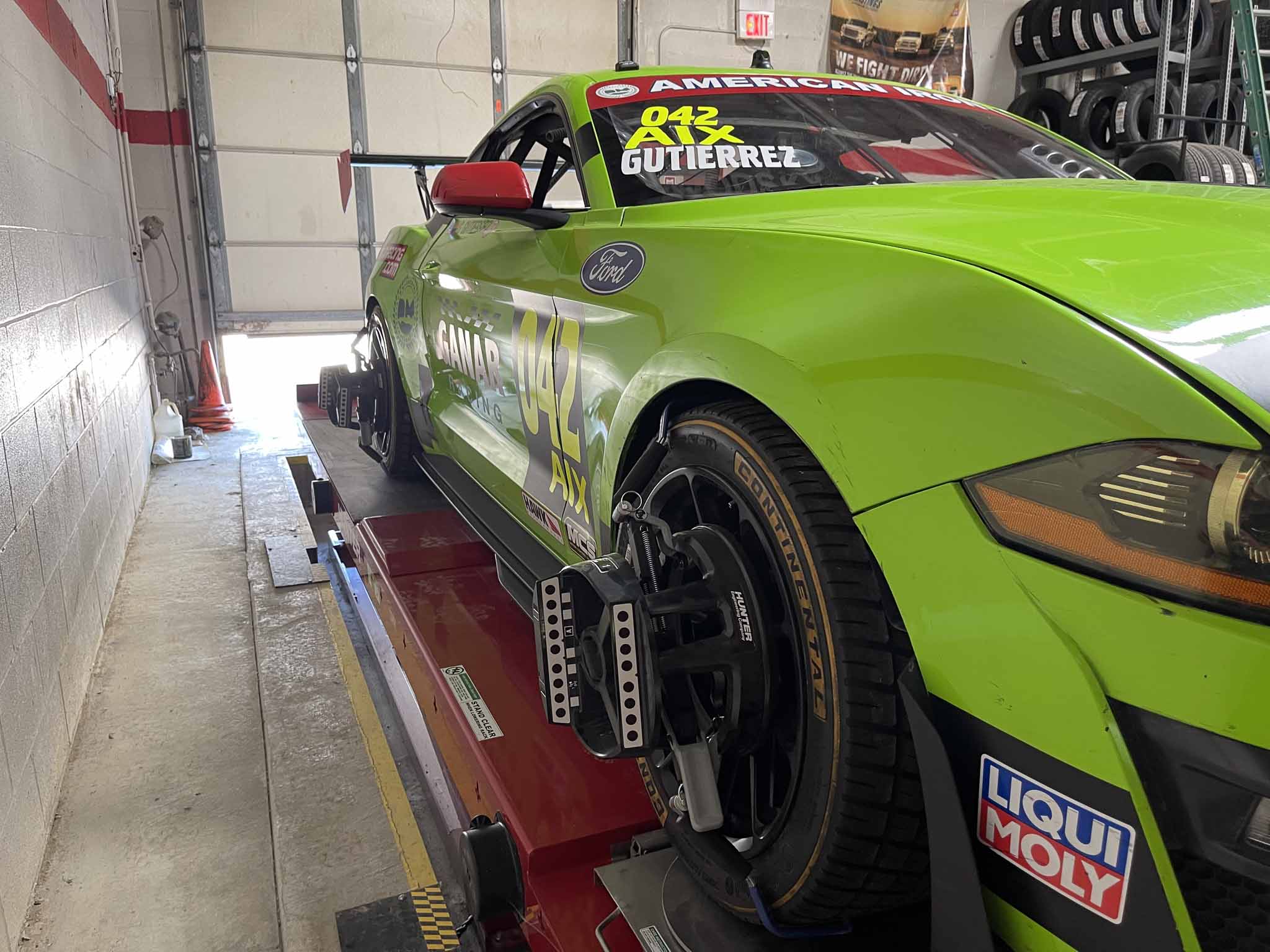
Start your winter plan with what the season told you and a full inspection, then schedule the jobs that need a long window, such as suspension overhauls, safety installations, and engine or driveline work. Finish with corner balancing, a fresh alignment, and a shakedown, leaving a few weeks before the first spring event.
The months between the last event of the season and the first one of spring are the most useful time you get with a track car all year. There is no event deadline, parts have time to arrive, and the car can come apart properly.
Atomic Autosports in Wickliffe, Ohio does a large share of its build and setup work in these months, and this is how we help drivers plan their off-season track car projects.
Why Plan Around the Off-Season Window?
In season, almost every job is shaped by the next event on the calendar. Work gets scoped to what can be finished in time, parts get chosen by what is in stock rather than what is right, and anything that would take the car off the road for a few weeks gets pushed to later. The off-season is the part of the year where later finally arrives.
That changes what is practical. A job that needs the suspension out of the car, a part with a long lead time, or a change that should be followed by a corner balance and a fresh alignment all fit comfortably into a winter window. They fit badly into a two-week gap between track dates. Shop schedules are also calmer in the colder months than in the spring rush, which leaves more time for careful work you only want to do once.
It also puts you ahead. A car that is finished, corner balanced, aligned and shaken down in March is a car you can actually drive at the first event instead of sorting in the paddock. Atomic Autosports at 29251 Anderson Road in Wickliffe, Ohio plans winter work backward from that first spring date rather than forward from whenever the car arrives.
Start With What the Season Already Told You
The most useful input to a winter plan is the season you just finished. You already know more about the car than any catalog does: what felt wrong in a particular corner, where the car ran out of brakes, what the tires looked like coming off, which session you were fastest in and why, and what you found yourself working around rather than driving. That list is the real build sheet.
Look closely at tire wear before anything gets ordered. How the shoulders and inner edges wore across the season says something about alignment, pressures and how the car is loading each corner, and that information is lost once the tires go in the corner of the garage. Brake pad and rotor condition works the same way, showing whether the brake package matched how you actually drove.
If you run data or video, the off-season is when there is time to actually watch it. Drivers often find that the thing they were about to spend money on was not the thing holding them up. Starting from what the car and the season told you tends to produce a shorter, better-aimed list than starting from a forum thread.
Why Inspection Comes Before Upgrades
A thorough inspection comes before the parts list, because it changes the parts list. With the car on a lift and the wheels off, it is easy to see the things that stay hidden during the season.
What to Check With the Wheels Off
- Suspension bushings and ball joints
- Wheel bearings
- Brake lines and hoses
- Fluid condition throughout the car
- Exhaust and driveline mounts
- Fasteners on anything that has been apart before
Safety equipment deserves its own pass. Harnesses, seats and extinguishers carry dates, and sanctioning bodies have rules about them that are easier to deal with in January than the week before an event. Checking what expires before next season is one of the cheapest things on the winter list and one of the most annoying to discover late.
Finding a worn bushing or a tired brake hose during a planned teardown means it gets handled as part of work already happening, with the car already apart, instead of becoming a separate job later. Atomic Autosports runs this inspection as the opening step of any winter track preparation build, so the plan that follows is based on the actual condition of the car.
Which Projects Actually Need the Winter Window?
Some work fits any time of year. Other work wants a long window, and those are the jobs to deliberately save for the off-season.
Suspension Overhauls
Coilovers, bushings, control arms and anything that changes ride height or geometry top the list, because the car needs to come apart and then needs setup time afterward.
Safety Installations
Roll bar and roll cage work, seat and harness mounting, and the fitment checking that goes with them are not jobs to rush between events.
Engine and Driveline Projects
These have the same character, and they are also the most exposed to parts lead times. Start them early in the window rather than late.
Setup After the Hardware
Anything that changes the car’s geometry or weight should be followed by setup work, and drivers most often underestimate that sequencing. Corner balancing and a fresh alignment belong after the hardware is installed and the car is at its final ride height. Planning the window so there is time for that final setup pass is the difference between a finished car and a car with new parts on it.
Wheels and Tires
Wheel and tire planning belongs in the same window even though it is not a shop job. Deciding what you are running next season affects alignment targets and sometimes clearance, and ordering early avoids the spring scramble when everyone else is ordering the same thing.
How to Store the Car Without Creating New Jobs
However the winter list shakes out, the car spends some of these months sitting, and a little planning there saves work in the spring.
- Fluids: Change them before a long sit. Used oil holds combustion byproducts that are better out of the engine than in it for a few months.
- Battery: Remove it or put it on a maintainer.
- Rodents: Store the car somewhere they will not move in. In this part of Ohio that is a common and expensive winter discovery.
- Tires: Tires take a set when a car sits in one spot for months, so move the car occasionally or store it on stands.
- Parking brake: Leave it off and chock the wheels instead so the brakes do not seize against the rotors.
- Fuel: Think about how much is in the tank and whether it will still be good in spring.
None of this is complicated, and all of it is easier to do once in November than to undo in March. The goal is simply that the car you come back to is the car you parked.
Building a Plan That Is Ready for Spring
A winter plan works best when it is sequenced rather than listed.
- Inspection: First, because it shapes everything after it.
- Long lead-time jobs: Next, since these can quietly consume the whole window waiting on a part.
- Installation: The hardware goes on.
- Setup: Corner balance and alignment at final ride height.
- Shakedown: With enough time left to fix whatever it finds.
Protect the shakedown. It is how you find the fitting that needs another turn or the noise that was not there before, at low speed and close to home instead of in a session. Leaving a few weeks between finished and first event is what holds the rest of the plan together.
Atomic Autosports works through this sequencing with drivers throughout Northeast Ohio and books winter build work around it, so booking early pays off. Apex Club members receive priority scheduling and a discount on services, which adds up across a multi-visit winter project.
Apex Club Membership
- Priority scheduling with 24 hour notice for most appointments
- 15 percent off all services throughout the year
Frequently Asked Questions
When should I start off-season work on my track car?
The most useful time to start is right after the last event of the season, while what the car did is still fresh and before parts lead times and the spring shop rush compress the window. Starting early also leaves room for a shakedown before the first event. Atomic Autosports in Wickliffe, Ohio plans winter builds backward from a driver’s first spring date rather than forward from when the car arrives.
What should I inspect before planning winter upgrades?
A full inspection with the car on a lift and the wheels off covers suspension bushings and ball joints, wheel bearings, brake lines and hoses, fluid condition, driveline and exhaust mounts, fastener condition, and the dates on safety equipment like harnesses, seats and extinguishers. Inspecting first usually changes the parts list. Atomic Autosports runs this as the opening step of any winter build.
What suspension work is best done in the off-season?
Anything that requires the car to come apart and then be set up afterward fits the off-season well, including coilovers, bushings, control arms, and any change to ride height or geometry. These jobs need setup time after installation, which is hard to find between events. Atomic Autosports in Northeast Ohio schedules this work with the follow-up setup built into the plan.
Do I need a new alignment after winter suspension work?
Yes. Any change to ride height, suspension hardware or geometry changes the alignment, so corner balancing and a fresh alignment belong after the hardware is installed and the car is sitting at its final ride height. Doing setup before the build is finished means doing it twice. Atomic Autosports in Wickliffe, Ohio sequences winter projects so the setup pass comes last.
How should I store my track car over winter?
Fresh fluids before a long sit, a battery that is either removed or on a maintainer, storage somewhere rodents will not move in, and attention to how the tires sit, since tires take a set when a car stays in one spot for months. Leaving the parking brake off and chocking the wheels avoids brakes seizing. Atomic Autosports advises Northeast Ohio drivers on storage as part of off-season planning.
How far ahead should I book shop time for winter projects?
Earlier than most drivers expect, because the jobs that suit the off-season are the ones with long lead times and multi-stage schedules, and because shop calendars fill toward spring. Booking early also protects the shakedown window before the first event. Apex Club members at Atomic Autosports receive priority scheduling, which helps across a multi-visit winter build.
Plan Your Off-Season Build
Know what you want done this winter, or still working out what the season was telling you? Book an off-season planning inspection and leave with a sequenced plan and a realistic date for having the car ready.
Book Your Off-Season Planning Inspection
Bring the car in after your last event and we will build a sequenced winter plan around your first spring date.