

Summer heat changes how your dampers, tires, and chassis balance behave on track. Damper fluid thins at elevated temperatures, reducing effective damping force. Tires expand under heat, shifting the contact patch and load path through the suspension. Adjusting damping settings, verifying corner weights, and inspecting components before a summer event helps maintain the handling balance you had in cooler conditions.
At Atomic Autosports in Wickliffe, Ohio, we specialize in track preparation, corner balancing, and coilover tuning for performance drivers across Northeast Ohio and near Cleveland. Our team works with platforms including the Miata, S2000, WRX STI, Corvette, and BMW M cars, and we approach summer track prep as a system rather than a single adjustment.
Some drivers searching online may type Atomic Motorsports when looking for our shop. The correct name is Atomic Autosports.
How Do Summer Temperatures Change Suspension Behavior on Track?
Track surface temperatures in July and August in Northeast Ohio can climb well above ambient air temperature. That thermal load works through your tires and into your suspension in ways that most drivers do not account for until they are already off their target lap time. Suspension components that felt perfectly calibrated in May can behave measurably differently when the pavement is radiating heat and you are three sessions into a full day.
Tire Contact Patch Changes
As heat builds in the tires during a session, the rubber compounds soften and the tires begin to expand slightly under load. If your alignment was dialed in for a colder baseline, that thermal expansion shifts how the tire actually contacts the pavement, which changes the effective load path through your control arms and uprights.
Drivers who have been running the same setup since spring often describe a progressively loose rear or an understeering push in late session. They chalk it up to tire wear when the real culprit is a chassis that was never set up for hot weather running.
Damper Fluid Behavior in Heat
Most performance dampers use hydraulic fluid that thins as temperature rises. On a cold morning session, those dampers feel planted and well controlled. By mid afternoon at a summer track day, that same fluid is cycling through the valving faster than it was designed to, which reduces effective damping force.
The car does not feel broken. It just feels slightly less planted, a little more prone to bobbing over surface irregularities, and a little slower to recover from aggressive direction changes. If you have not driven your setup in those conditions specifically, it is easy to misread the symptom and start chasing the wrong problem.
For platforms like the Miata, S2000, WRX STI, and C6 or C7 Corvette that Atomic Autosports regularly prepares for track use, the thermal behavior varies based on suspension geometry, spring rate, and whether the car is running track spec or street spec dampers.
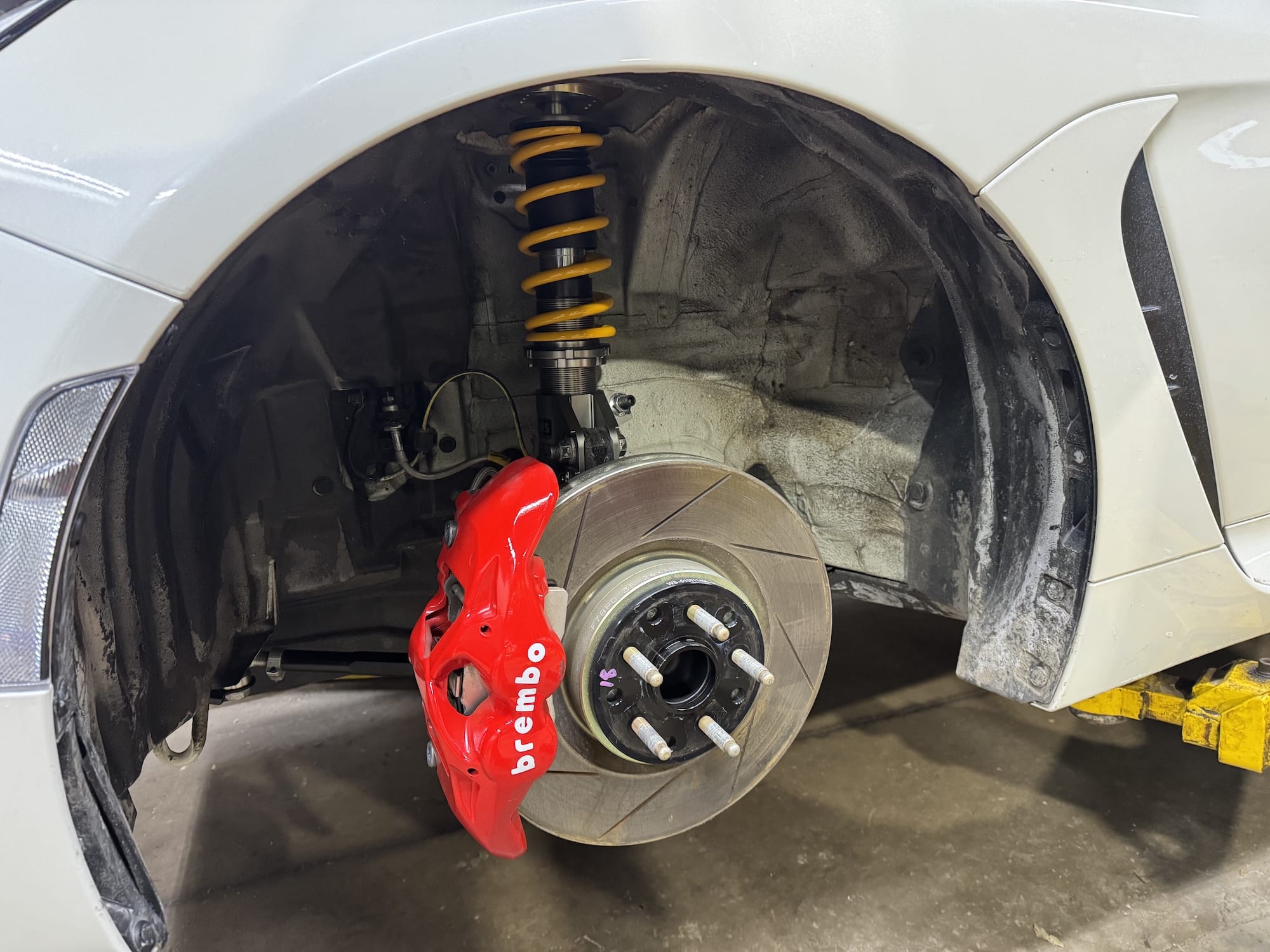
How Should You Adjust Coilover Damping and Spring Rates for Hot Weather?
A proper suspension setup for summer track days starts with understanding that the settings you dialed in for cooler conditions are not wrong. They are optimized for a different thermal environment. The adjustment strategy depends on what type of coilover system you are running and how much adjustability it offers.
Single Adjustable Coilovers
For drivers running single adjustable coilovers, the summer tuning conversation is largely about damping. If your units offer compression and rebound adjustment as a combined circuit, softening that adjustment slightly for hot weather running helps compensate for the reduced fluid viscosity at elevated temperatures.
The goal is to maintain the damping behavior you were achieving in cooler conditions, not to fundamentally change the car’s character. How far you adjust is specific to the coilover brand, the valving, and the platform. There is no universal number to chase, which is part of why this conversation almost always needs to happen in person with someone who has experience with similar setups.
Spring Rate Considerations
Spring rate is a more involved adjustment and not something most drivers are swapping mid event. But for drivers choosing spring rates heading into a summer build or seasonal refresh, the interaction between spring rate and damping becomes especially important in heat.
A spring that is well matched to the damper at lower temperatures may expose a mismatch when the damper fluid thins under sustained thermal load. This is one reason why Atomic Autosports approaches coilover selection as a system conversation rather than picking a spring rate in isolation.
Reservoir Style Dampers
For platforms with external or remote reservoirs, those units generally handle heat better because the additional fluid volume takes longer to reach temperature equilibrium. Drivers on those systems still benefit from checking baseline settings before a summer event, but they typically have more margin before thermal effects become noticeable at the limit.
If you are shopping for coilovers with summer track use in mind, reservoir style dampers are worth the added cost for this reason alone. That is a conversation Atomic Autosports has regularly when helping Northeast Ohio drivers spec out a new setup.
What Does Corner Balancing Have to Do With Summer Track Performance?
Corner balancing is the process of equalizing the weight at each corner of the car by making precise adjustments to ride height at each suspension perch. It is done on calibrated scales with the car at its actual track weight, including the driver. The result is a chassis that loads each tire more evenly, which produces more consistent grip, more predictable handling balance, and more repeatable lap times.
The relationship between corner balancing and summer track performance is almost never discussed outside of professional racing environments, but it matters significantly. A car with unequal corner weights generates unequal grip loads at each tire, which means the chassis behaves differently turning left versus turning right. That asymmetry becomes more pronounced as the tires heat up during a session.

Why Heat Amplifies Corner Weight Problems
When corner weights are off, the overloaded tires reach operating temperature faster than the underloaded ones. By the third or fourth lap of a hot summer session, you are running on four tires at meaningfully different temperatures, which means four different contact patch sizes and four different grip levels.
The car does not fall apart. It just becomes inconsistent. You might find a particular corner that feels planted one lap and nervous the next. Without data logging, it is almost impossible to diagnose as a weight distribution issue rather than a driver error.
In a summer heat scenario where your tires are already working harder to manage temperatures, starting with a balanced chassis means you are not asking any single tire to carry more than its share of the load. For drivers chasing their first sub 2 minute lap or trying to close the gap at an autocross event, corner balancing frequently delivers consistent results when everything else has already been addressed.
When Should You Schedule a Suspension Check Before a Summer Track Day?
Four to six weeks before the event is the practical window. That timeline allows enough lead time to complete an inspection, identify any components that need replacement, receive parts, and schedule a return visit for corner balancing and final alignment verification after new components settle.
At Atomic Autosports, located at 29251 Anderson Road in Wickliffe, Ohio, the track preparation process evaluates alignment geometry, damper condition, suspension bushings, and corner weights as a complete picture rather than individual line items.
For drivers who participate in multiple events across the season, a mid season check is worth building into your calendar regardless of whether anything feels wrong. Summer heat accelerates wear on rubber suspension components and can cause alignment values to drift from their target settings even when nothing has failed. A setup that was dialed in correctly in April may be measurably off by the time you are staging for your third event.
Apex Club Priority Scheduling for Summer Events
Drivers who are members of the Apex Club at Atomic Autosports get priority booking with 24 hour notice for most appointments, which makes mid season scheduling significantly easier during the busy summer months. Membership also includes 15 percent off all services up to $150 per visit, which is a meaningful offset for drivers running track events regularly and putting real load through their suspension components.
The Apex Club program is available at https://atomicautosports.com/product/apex-club/ and is designed for drivers who treat track preparation as a recurring investment rather than a one time event. First year pricing is $129.55, regularly $299.55, a savings of over $170.
Apex Club Membership
- Priority booking with 24 hour notice for most appointments
- 15 percent off all services up to $150 per visit
Frequently Asked Questions
Does summer heat actually affect suspension enough to notice on track?
Yes. Elevated track surface temperatures change how damper fluid flows through the valving, reducing effective damping force during hot afternoon sessions. Tires also expand slightly as heat builds, shifting the load path through suspension geometry. At Atomic Autosports, this is one of the most common root causes when drivers report that a car felt different in later sessions compared to the morning.
How do I know if my corner weights are off before a summer track day?
Inconsistency between left hand and right hand corners during a session is the most reliable indicator, particularly as the tires heat up. A car with unequal corner weights loads each tire differently, which means grip levels diverge as temperatures rise. The only accurate way to confirm corner weights is on calibrated scales. Atomic Autosports performs corner balancing as part of its track preparation services.
Should I change my coilover damping settings for summer track days?
For most single adjustable coilover setups, a modest softening of the damping adjustment can help compensate for reduced fluid viscosity at elevated temperatures. The goal is to maintain the same effective damping behavior rather than fundamentally change the car’s character. The right adjustment depends on the specific coilover brand, the valving, and the platform. Atomic Autosports works with a wide range of coilover systems and can give platform specific guidance.
How far in advance should I schedule a suspension check before a summer track day near Cleveland?
Four to six weeks before the event is the practical window. That timeline allows Atomic Autosports to complete an inspection, identify components that need replacement, receive parts, and schedule a follow up visit for corner balancing and final alignment verification. Apex Club members receive priority booking with 24 hour notice, which helps during the busy summer scheduling period.
Can a performance alignment improve how my car handles summer heat?
Yes. A proper track alignment sets camber, caster, and toe to match how your car loads its tires under high speed cornering conditions. In summer heat, tires that are already working hard to manage temperatures benefit from geometry that keeps the contact patch as flat and consistent as possible. Alignment values that drift over a season can cause the car to overheat specific tires faster than others. Atomic Autosports performs track spec alignments for performance and competition drivers across Northeast Ohio.
Schedule Your Pre Event Suspension Check
If your next track event is on the calendar and your suspension has not been reviewed since spring, now is the time to get it right.
Wickliffe, OH 44092
Website: https://www.atomicautosports.com
Apex Club: https://atomicautosports.com/product/apex-club/
Next steps:
- Schedule a pre event suspension check and corner balance
- Join Apex Club for $129.55 and get priority booking during peak summer season
- Book a track alignment to complete your summer preparation
When precision matters and conditions change, Atomic Autosports is the trusted choice for track preparation serving Northeast Ohio.
Book Your Pre Event Suspension Check
Damping adjustments, corner balancing, alignment verification, and a full component inspection built around summer track conditions. Get your setup dialed in before you grid.